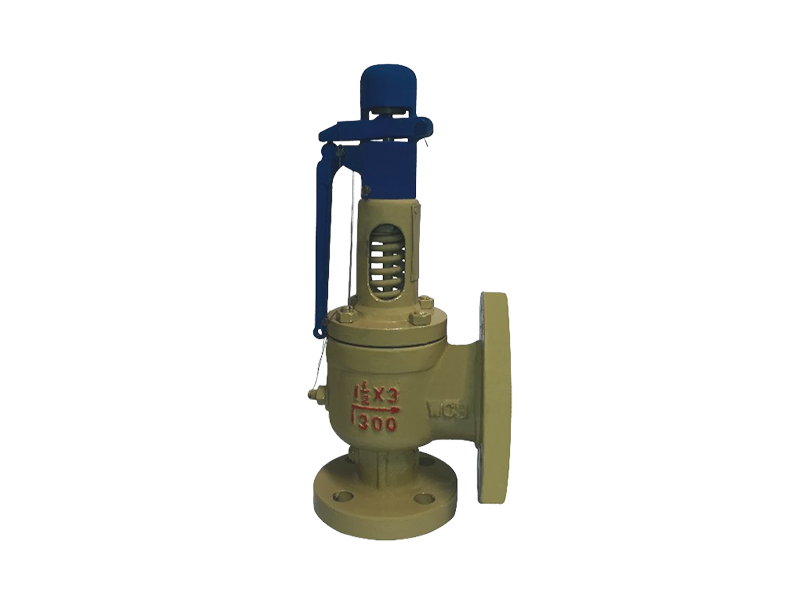
Pound-class spring-loaded safety valve
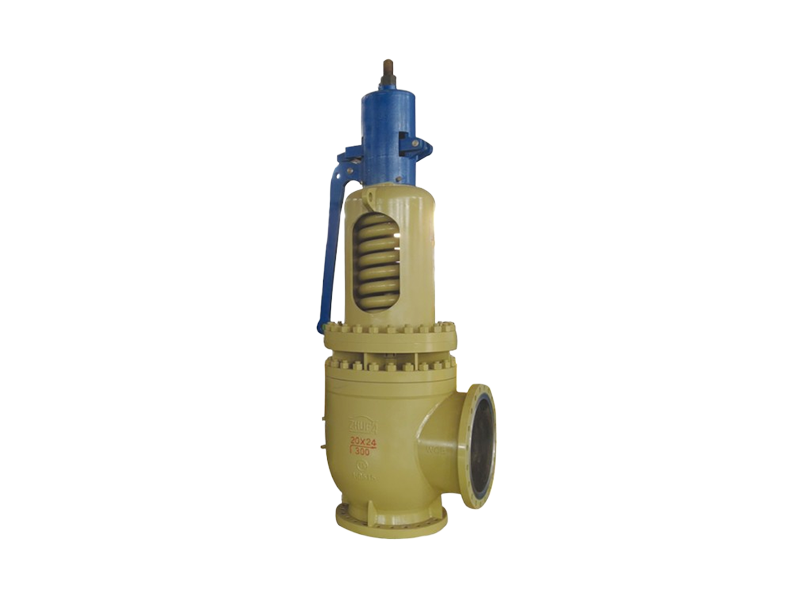
Safety valves are used on pressure vessels such as boilers and pressure containers as overpressure protection devices. When the pressure of the medium inside the protected equipment rises abnormally and exceeds the specified value, the valve automatically opens and then fully opens to prevent the pressure from continuing to rise; when the pressure drops to the specified value, the valve automatically closes to ensure the normal operation of the equipment. With the arrival of the replacement cycle for imported equipment safety valves in China and China's accession to the WTO, based on ISO4126 "General Requirements for Safety Valves", API526 "Steel Flanged Safety Relief Valves", ASME/ANSIB16.5a "Pipe Flanges and Flanged Fittings", and other standards, and drawing on the experience of domestic and foreign manufacturers of similar products, this factory has compiled this catalog based on the data from the past 10 years of production of American standard safety valves for users and agents to refer to when selecting products.
Pound-class spring-loaded safety valve
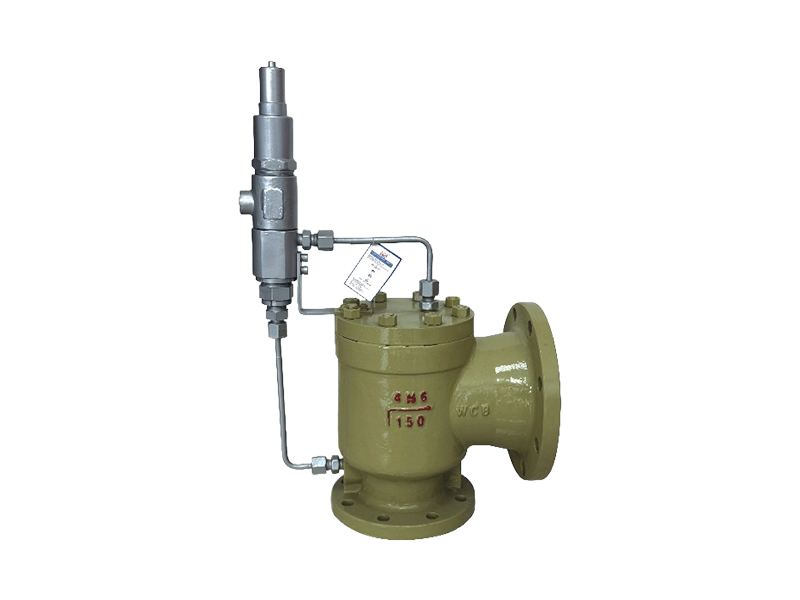
Safety valves are used on pressure vessels such as boilers and pressure containers as overpressure protection devices. When the pressure of the medium inside the protected equipment rises abnormally and exceeds the specified value, the valve automatically opens and then fully opens to prevent the pressure from continuing to rise; when the pressure drops to the specified value, the valve automatically closes to ensure the normal operation of the equipment. With the arrival of the replacement cycle for imported equipment safety valves in China and China's accession to the WTO, based on ISO4126 "General Requirements for Safety Valves", API526 "Steel Flanged Safety Relief Valves", ASME/ANSIB16.5a "Pipe Flanges and Flanged Fittings", and other standards, and drawing on the experience of domestic and foreign manufacturers of similar products, this factory has compiled this catalog based on the data from the past 10 years of production of American standard safety valves for users and agents to refer to when selecting products.
Pound-type pilot-operated safety valve
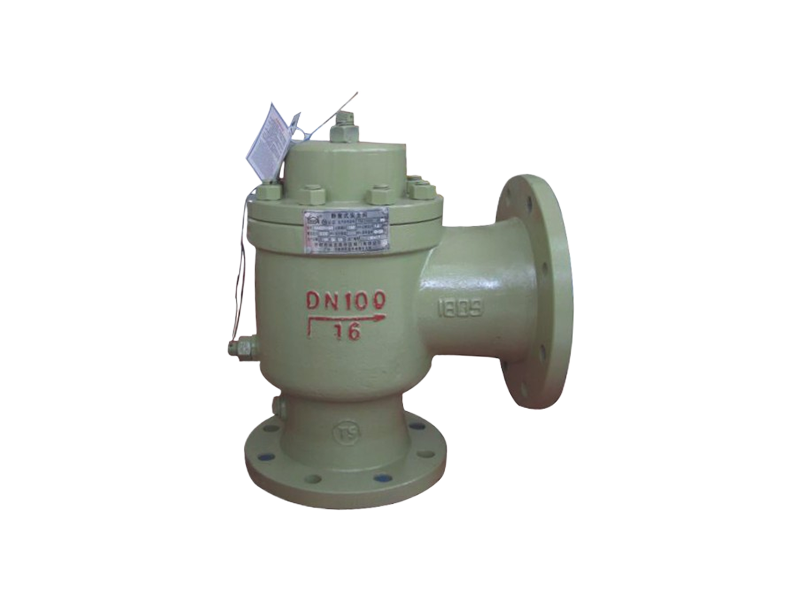
ZFA46 Series Pound-Rated Pilot-Operated Safety Valve
Low-pressure fine-tuning built-in static weight safety valve
Special Series Safety Valve
The low-pressure fine-tuning built-in static weight safety valve has a novel structure, with a structure involving the valve disc through the built-in weight gravity and a spring weight combination to improve the valve sealing performance and operation performance. The low-pressure fine-tuning built-in static weight safety valve is used in thermal systems as an overpressure protection valve on steam boilers, pressure steam containers, and pipelines. Its main features are as follows:1. The low-pressure fine-tuning built-in static weight safety valve can withstand the design of piping systems that work under low pressure and low load;
2. The low-pressure fine-tuning built-in static weight safety valve is a type of valve with a sealing surface where the built-in static weight and spring cooperate to load the valve disc, allowing for fine-tuning when the working pipeline pressure is low;
3. Using a built-in static weight sealing surface structure, it better protects the pressure vessel and pipeline; the built-in structure of the valve disc, valve seat, and weight makes it unaffected by the external environment even when there is significant pollution, particles, and dust in the external environment, allowing for better sealing; and it can be adjusted when the pressure needs minor adjustment.
4. Moreover, the valve opening, tripping discharge, and reseating performance under low pressure meet the standard requirements, and the action performance is repetitive and reliable. It overcomes the shortcomings of external weight design that is prone to leakage and the opening, tripping, reseating performance not meeting the standard requirements and poor action repeatability when the valve is externally damaged.
5. Using a low-pressure fine-tuning structure. The spring action and weight combination design causes the safety valve's weight center of gravity to shift downward, directly acting on the valve disc, ensuring stable performance when the valve opens, trips, and discharges; the spring force slightly acts on the valve disc and valve seat, preventing collisions during transportation and reducing damage to the sealing surface.
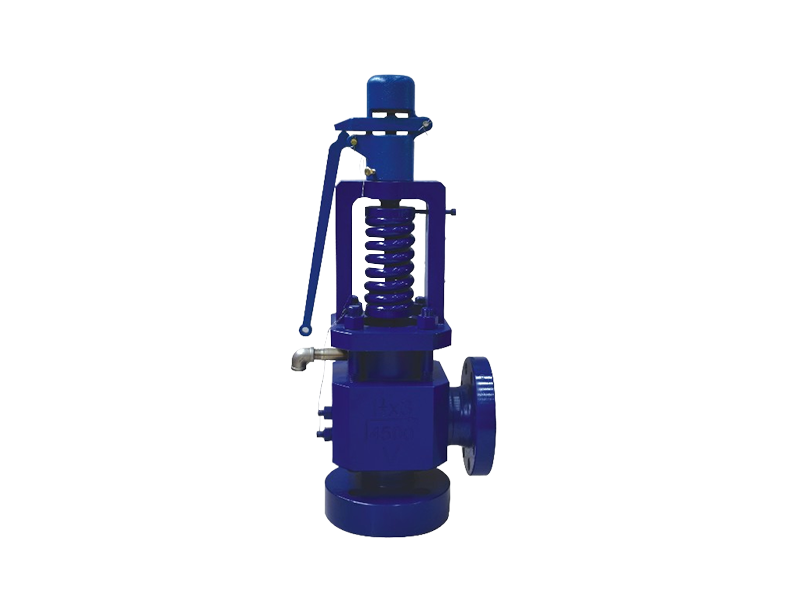
Forged high-temperature safety valve
High-temperature safety valves feature a large discharge coefficient, accurate opening pressure, small opening and closing pressure difference, good sealing performance, and convenient adjustment. Material code C- applicable to working temperatures ≤425℃, material code I- applicable to working temperatures ≤510℃, material code V- applicable to working temperatures ≤540℃. They are mainly used as overpressure protection devices on steam pressure vessels, pipelines, and other protected equipment.
Its main features are as follows:
1. A blow-out preventer is installed on the stem, which is fitted and sealed with the lower flange of the heat sink in a concave-convex arrangement. The lower end face of the blow-out preventer has a circular groove, and the lower flange of the heat sink has a retaining ring that can be inserted into the groove. This prevents high-speed hot gas flow from entering the valve cover spring chamber during valve discharge, affecting the spring performance; and prevents dust from entering between the guide tube and the sleeve, reducing the friction during valve opening.
2. A locking sleeve that presses against the upper surface of the valve disc and a limit sleeve located below the heat sink are provided on the valve stem. The locking sleeve is close to the upper end face of the valve disc and is fixed to the valve stem with threads and a cotter pin. It is used to lock the connection between the valve disc and the valve stem; lowering the center of gravity of the stem and increasing its stability. The limit sleeve is fixed to the stem with threads and a cotter pin. It is used to accurately adjust the valve opening height; lowering the center of gravity of the stem and increasing its stability.
3. The safety valve sealing pair uses a valve disc with an elastic self-sealing structure and function. With the reasonable design of the pressure groove and elastic groove, the higher the medium pressure, the more significant the self-sealing effect of the valve disc, and the more reliable the valve seal.
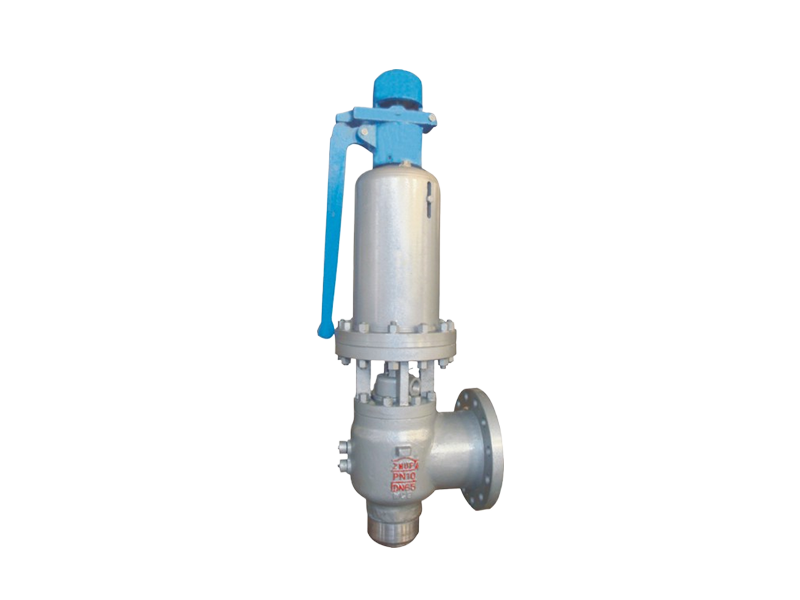
Its main features are as follows:
1. A blow-out preventer is installed on the stem, which is fitted and sealed with the lower flange of the heat sink in a concave-convex arrangement. The lower end face of the blow-out preventer has a circular groove, and the lower flange of the heat sink has a retaining ring that can be inserted into the groove. This prevents high-speed hot gas flow from entering the valve cover spring chamber during valve discharge, affecting the spring performance; and prevents dust from entering between the guide tube and the sleeve, reducing the friction during valve opening.
2. A locking sleeve that presses against the upper surface of the valve disc and a limit sleeve located below the heat sink are provided on the valve stem. The locking sleeve is close to the upper end face of the valve disc and is fixed to the valve stem with threads and a cotter pin. It is used to lock the connection between the valve disc and the valve stem; lowering the center of gravity of the stem and increasing its stability. The limit sleeve is fixed to the stem with threads and a cotter pin. It is used to accurately adjust the valve opening height; lowering the center of gravity of the stem and increasing its stability.
3. The safety valve sealing pair uses a valve disc with an elastic self-sealing structure and function. With the reasonable design of the pressure groove and elastic groove, the higher the medium pressure, the more significant the self-sealing effect of the valve disc, and the more reliable the valve seal.
High-temperature, high-pressure safety valve
High-temperature, high-pressure safety valves feature a large discharge coefficient, accurate opening pressure, small opening and closing pressure difference, good sealing performance, and convenient adjustment. Under high-temperature, high-pressure operating conditions, they effectively function as system safety valves and control energy consumption. They are mainly used on pressure vessels or pipelines of power plant main steam, and on pressure vessels and pipelines used for transporting process heat steam in catalytic cracking and other processes in the chemical industry, serving as overpressure protection devices. Their main features are as follows:
1. Valve Seat: The valve seat sealing surface is plasma-sprayed cobalt-based hard alloy, which is wear-resistant, erosion-resistant, and long-lasting;
2. Valve Disc: The valve disc is a combination valve disc. Using various components, it can be designed into a simple structural shape with good processability and high precision. It is combined into a pressure-bearing groove structure with good elastic sealing capacity, improving the sealing capacity and performance of the valve group;
3. The contact area between the valve stem head and the valve disc pad is cobalt-based hard alloy clad, which is high-hardness, wear-resistant, and long-lasting.
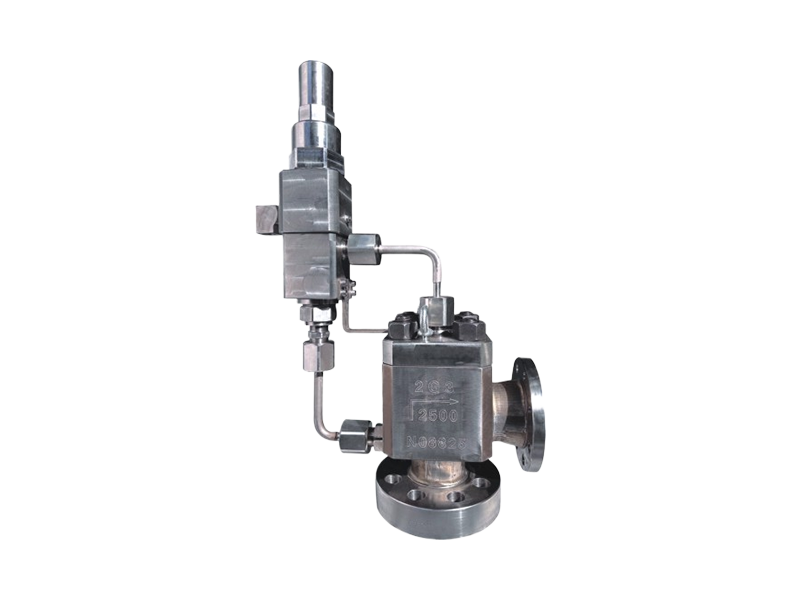
1. Valve Seat: The valve seat sealing surface is plasma-sprayed cobalt-based hard alloy, which is wear-resistant, erosion-resistant, and long-lasting;
2. Valve Disc: The valve disc is a combination valve disc. Using various components, it can be designed into a simple structural shape with good processability and high precision. It is combined into a pressure-bearing groove structure with good elastic sealing capacity, improving the sealing capacity and performance of the valve group;
3. The contact area between the valve stem head and the valve disc pad is cobalt-based hard alloy clad, which is high-hardness, wear-resistant, and long-lasting.
Forged workpiece pilot safety valve
Pilot-operated safety valves utilize a pilot valve pressure signal to open the main valve. They are characterized by sensitive opening, accurate opening pressure, high reseating pressure, good sealing performance, and easy adjustment. They are widely used in petroleum, natural gas, and other equipment or systems as overpressure protection devices. They effectively contribute to the safe operation of system valves and control energy consumption. Their main features are as follows:
1. A split structure is adopted for the pilot valve lower valve disc, consisting of a lower valve disc shaft and a lower valve disc plate.
2. A stepped pilot valve lower valve disc shaft is designed. The shaft material undergoes heat treatment to increase its hardness and prevent seizing with the connecting body during movement: The difference between the stepped shaft diameter and the blank shaft diameter is between 0~10mm. The blank shaft is circular, and the stepped section is an approximate triangular section cut from a circular section, reducing friction while providing centering guidance and flow.
3. A pilot valve lower valve disc plate is designed. The upper surface is the sealing surface. After separation, the sealing surface can be lapped, improving the accuracy of the sealing surface and its sealing performance, producing a good pulse effect; The outer circle of the lower valve disc plate is also an approximate triangular section cut from a circular section, reducing friction while providing centering guidance and flow.
4. A lower spring is designed. By adjusting the position of the adjusting body, the small spring is compressed or relaxed to adjust the distance between the sealing surface of the lower valve disc plate and the internal sealing surface of the positioning body, achieving the optimal effect of generating pressure pulses. At the same time, the small spring ensures the synchronous movement of the lower valve disc shaft and the lower valve disc plate, improving the pilot valve's performance and thus improving the main valve's performance.
1. A split structure is adopted for the pilot valve lower valve disc, consisting of a lower valve disc shaft and a lower valve disc plate.
2. A stepped pilot valve lower valve disc shaft is designed. The shaft material undergoes heat treatment to increase its hardness and prevent seizing with the connecting body during movement: The difference between the stepped shaft diameter and the blank shaft diameter is between 0~10mm. The blank shaft is circular, and the stepped section is an approximate triangular section cut from a circular section, reducing friction while providing centering guidance and flow.
3. A pilot valve lower valve disc plate is designed. The upper surface is the sealing surface. After separation, the sealing surface can be lapped, improving the accuracy of the sealing surface and its sealing performance, producing a good pulse effect; The outer circle of the lower valve disc plate is also an approximate triangular section cut from a circular section, reducing friction while providing centering guidance and flow.
4. A lower spring is designed. By adjusting the position of the adjusting body, the small spring is compressed or relaxed to adjust the distance between the sealing surface of the lower valve disc plate and the internal sealing surface of the positioning body, achieving the optimal effect of generating pressure pulses. At the same time, the small spring ensures the synchronous movement of the lower valve disc shaft and the lower valve disc plate, improving the pilot valve's performance and thus improving the main valve's performance.